Safe Design Workshops bring designers, clients, contractors, operators and other key stakeholders together to identify and eliminate hazards before they become embedded in a project. By doing so, they improve safety, buildability, maintenance and long-term asset performance while helping designers meet their WHS duties.
Safe Design in Practice: Workshops
Designers can identify hazards and eliminate or minimise risks during design, construction and the ongoing use of a structure by consulting with other duty holders through formal Safe Design Workshops.
Ideally, an early workshop during the design phase brings key stakeholders together to brainstorm potential hazards and evaluate the design under the guidance of a facilitator.

Subsequent workshops encourage stakeholders to participate in detailed design discussions. They also help teams address issues relating to construction, maintenance, use, adaptation and eventual demolition of the structure.
Safety in Design Tool
WorkCover NSW (now known as SafeWork NSW) developed a safety in design tool known as the Construction Hazard Assessment Implication Review Process (CHAIR Process) which uses guidewords as a prompt to promote discussion.
The CHAIR process recommends the use of a facilitator to help guide the process to ensure that there are not any issues that may have been overlooked.
The workshop should include a diverse range of stakeholders and follow a systematic methodology to significantly reduce the chance of overlooking a major hazard.
Who should participate in a Safe Design Workshop?
The hazard categories or guidewords found in the CHAIR Process tool may be useful in assisting the designer or facilitator to guide discussions to identify potential hazards. Effective Safe Design Workshops involve people who influence design decisions or understand how the asset will be constructed, operated, maintained or ultimately demolished. Participants may include:
- the designer
- the client
- project manager
- design manager
- engineers
- maintenance manager
- principal contractor
- workers’ representative
- employer at the workplace or operator
- plant designers
- consultants who influence safety decisions (e.g. childcare consultants, acoustic consultants, BCA consultants and fire services consultants)
- safe design consultant
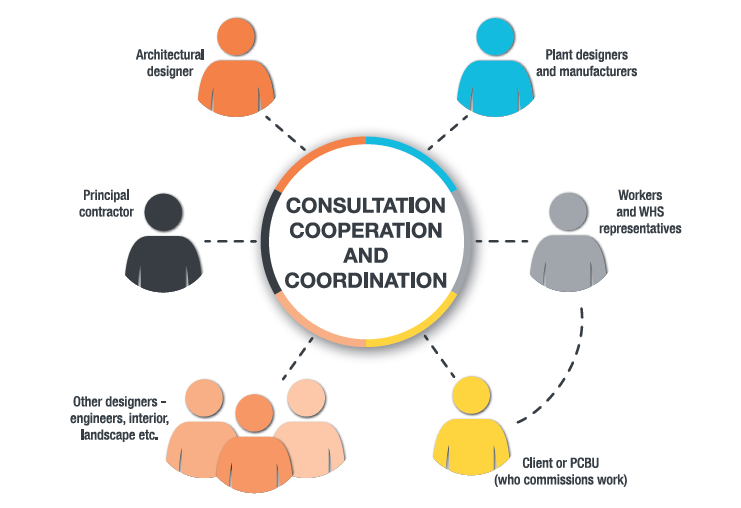
The workshop should identify potential hazards and develop practical solutions that improve the safety of the structure throughout its lifecycle as a workplace. In particular, participants should consider safety during:
- demolition of existing structures;
- civil and ground works including site layout;
- construction of structure;
- use for the purpose for which the structure is designed;
- maintenance, cleaning and repair of the structure; and
- demolition at end of life.
Benefits of a Safe Design Workshop Facilitator
A suitably independent Safe Design Workshop facilitator encourages objective discussion and challenges assumptions. This keeps the workshop focused on identifying and managing design risks.
The designer or facilitator should follow a systematic approach in identifying and discussing potential hazards relating to the design. Importantly, document all discussions, outcomes and action items so the workshop maintains a clear, structured approach from start to finish.
Design teams can use the Safe Design Workshop to populate the designer’s risk register, which forms part of the Safety in Design report. Learn more about Safe Design principles right at the source: SafeWork NSW Code of Practice: Safe Design of Structures.
Plan Your Safety in Design Workshop
Importantly, every project is different, and therefore every workshop should be tailored to suit its specific risks, stakeholders and objectives.
Whether you’re planning a small development, major infrastructure project or complex facility, we can facilitate structured Safety in Design Workshops that bring the right people together at the right time. Our workshops help identify hazards early, support informed design decisions and improve safety throughout the asset lifecycle.
If you want to build this capability within your own organisation, we also provide Safety in Design procedures, templates and training to help you confidently plan and facilitate your own workshops.
Planning a project? Contact our team to discuss the most appropriate Safety in Design Workshop approach for your project.